

Previously on The Market Vigil, I went over how bond yields driving down screams deflation not inflation, and one particular section that I covered was Japan.
Japan’s Debt-to-GDP ratio is sitting at 255%, meaning that they are at a high risk of defaulting on their current loans. Furthermore every Yield greater than or equal 2 years in duration has been blowing out so badly, I don’t know if I’m looking at the financial market in Japan, or this year’s Oklahoma City Thunder team with the way it has been blowing out…
ANYWAY…..
The one thing that has Japan has on the financial world…. is the largest carry trade in the world, one that doesn’t just effect the US, but all around the world: The Yen Carry Trade. In today’s super hyper leveraged environment, if anything catastrophic where to happen in Japan’s Financial System, the Global System goes BYE BYE!
But before we get there, we first need to establish….. what a carry trade is in the first place!
Carry Trading 101: Peeling Back The Entire Process
Alright folks, pull up a chair and take notes, it’s time to explain what a carry trade is!
So, we have our friend here Mr. Masumoto and he’s from Tokyo, Japan! He has an asset management business where he basically acquires and manages assets all around the world.
Mr. Masumoto one day goes to a commercial Bank in Japan. He would like to borrow 100 billion Yen. The Annual Interest rate there is 0.5%, which is virtually free! Now 0.5% of 100 billion is 10 billion, meaning that Mr. Masumoto will have to pay back 110 billion yen.
Now the thing is in order to get the 100 billion yen, Masumoto will have to pledge his collateral, meaning he’ll have to put up assets worth 110 billion yen in value as collateral should he default on his loan.
Let’s say it’s a pool of bonds he has from Japan ranging from the 10 year to 40 year bond worth 110 billion yen, he gives it to the bank, the bank accepts, he gets the 100 billion yen!
Next, Masumoto than walks into the foreign exchange market some where in Japan. he would like to convert the yen to dollars, because he wishes to invest in the stock market in the US.
So to convert the Yen to dollars, you take the yen amount, and you multiply it by 0.0064, that’s how much 1 yen cost in the US. so when you do the math, it comes out to be $640 Million.
Finally, Masumoto uses the $640 million to purchase stocks, and other performing assets.
The net yield that Masumoto makes is his average yield from his preforming assets in the US market minus the interest rate on the yen that he borrowed.
Let’s say Masumoto’s average yield in the US markets is 8%. If you subtract out 8% from 0.1%, the interest rate he must pay from borrowing the 100 billion yen, Masumoto’s Net Yield is 7.9%!
And that’s a carry trade in a nut shell:
-A person from their home country goes to a commercial bank of their home country, borrows there, puts up colleterial.
-Goes to the Foreign Exchange, convert’s their home countries currency, to a currency of a country that they would like to invest in, uses that currency to purchase preforming assets in that country.
Congratulations! You are now a carry trade expert!
Why You (Should) Actually Care About The Yen Carry Trade
Globally, the value of the Yen Carry Trade is at $1.5 trillion, but some are saying it is more than that.
You see, in the example I showed above…… Mr. Masumoto isn’t the only one who’s doing the yen carry trade, oh no, it’s other investors like him, and also institutional traders that does this! And that 7.9% yield is very attractive! So what do they do to get a better yield like the greedy bastards they are? Well they leverage up so much by borrowing even bigger amounts of yen! ….. they are simply on a perk with the way they are leveraged…. it’s insane!
However, they don’t just invest in the US, they also invest in countries in Europe, Countries in Australia, New Zealand, Taiwan, and so much more.
Why?
Because Japan has the LOWEST interest rate of any country in the WORLD.
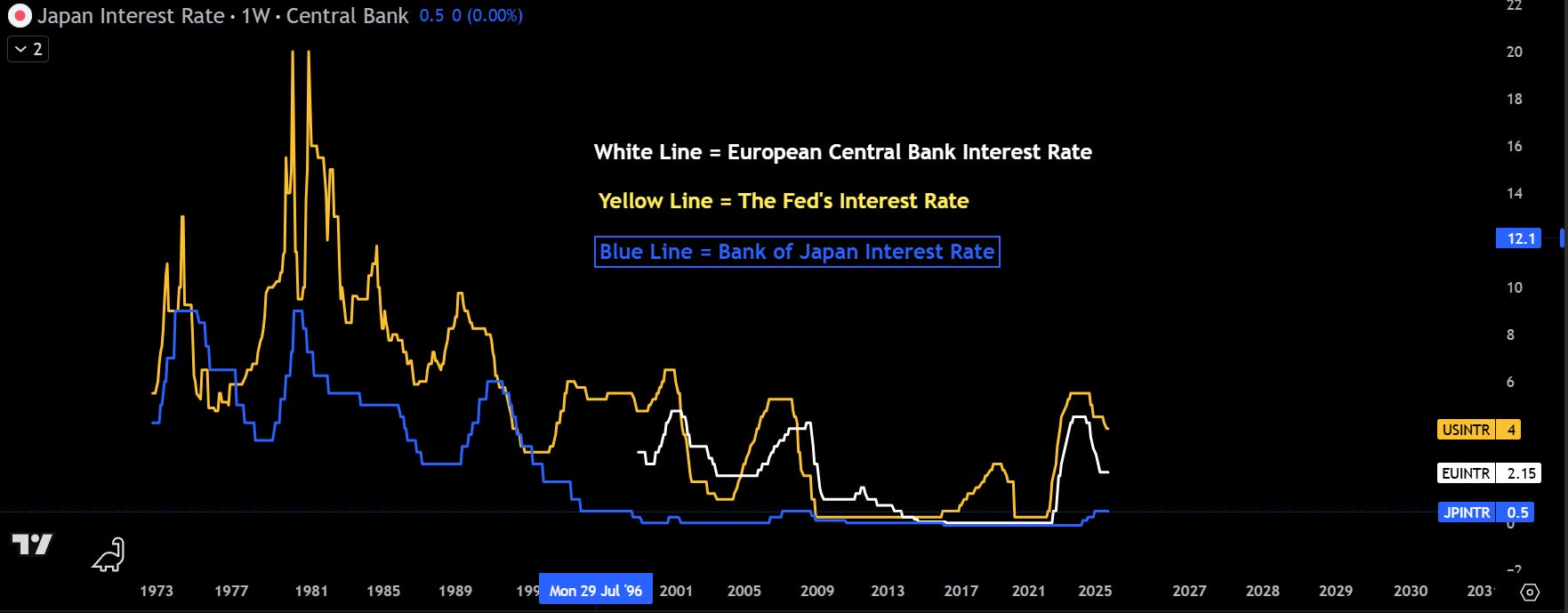
Yes, Japan has been doing zero interest rate policies way before the US and Europe. Now what does that mean?
This means for banks in Japan, they borrow money from the Central bank or each other via the short-term markets for FREE! They only have to worry about the principal amount.
Now the reason why Central banks in general puts the interest rate at 0 is because the thinking for central banks is that:
A. If the banks gets free money, then they will have no problem lending out to the economy.
B. Thanks to the cheap money, Businesses gets to hire people, grow their business or invest.
C. You, the reader, gets to get cheaper loans to get a house, a car, or even start a small business.
D. And because of the expansion of the money velocity (Remember the rate money changes hands), with the broad money supply expanding, this would give the economy the boost it needs to go to the boom and create the jobs.
Now Japan did this to desperately stimulate the economy after what happened in the 80’s with the stock market and real estate market crashing, leading to a massive deflationary event that caused slow growth of for a decade (known as the lost decade) but Japan has never recovered from it since.
It’s not just they were the first major country to do this, they were also the first country to implement Quantitative Easing, a process where a central bank prints money and purchases a pool of bonds in a large amount from commercial banks. The money then gets put into the reserve accounts of banks. They were also the first country to implement yield curve control, where they print money, and buy majority of the bonds that is present, regardless of duration, ensuring yields would remain stable. This causes their currency to weaken. On top of that they did negative interest rate (From 2016 all the way up to last year) meaning the BOJ was charging a fee to banks for parking their extra money! They want them to LEND in the economy BADLY.
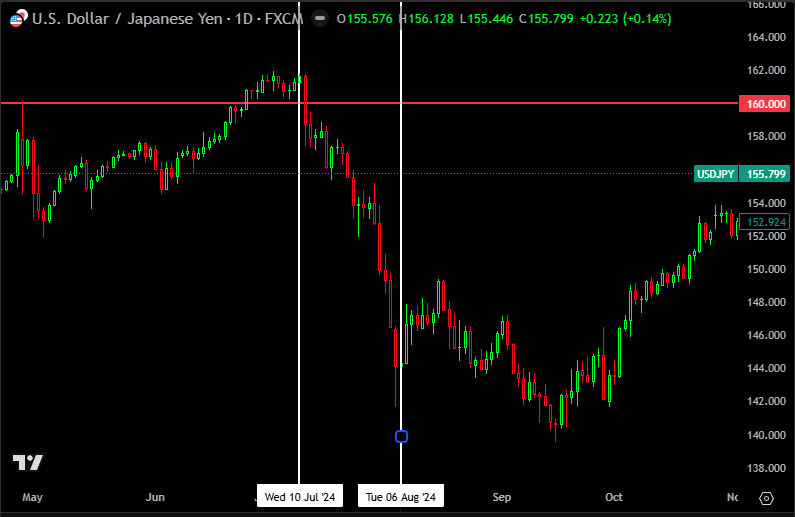
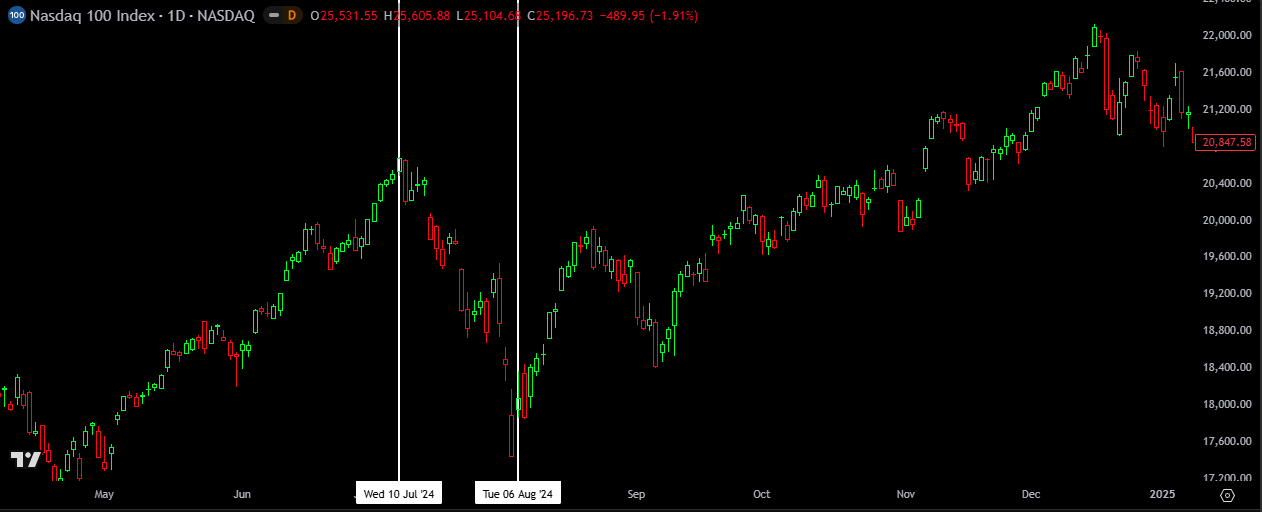
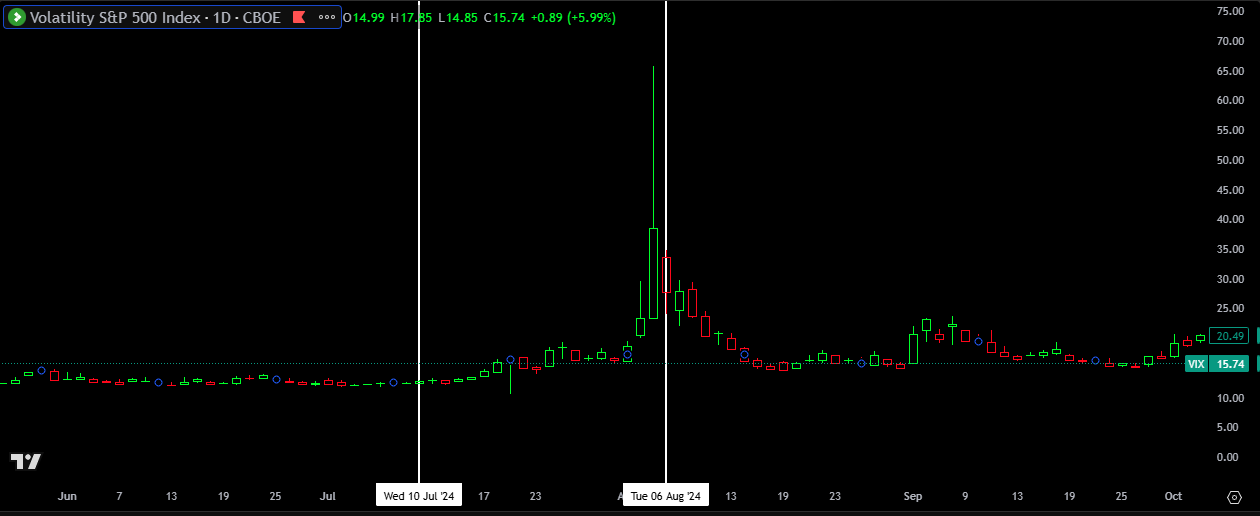
The biggest risks of them all is rates rising in Japan. If the BOJ decided to hike, it would cause the Yen to be more expensive, yields starting to quickly blow out, and everyone that did the carry trade would have to sell their preforming assets in the country they’re invested in and pay their loan back in yen.
If you live in the US and you are invested in Tech and Crypto, it becomes very volatile, and because of this the VIX will spike due to this. Prime Example is July 11th to August 4th of last year. Have a look at the 3 pictures below!
Yen Carry Trade Significantly Amplifies The Risks Already In Play
Now, this is where we connect the dots, building on the previous 3 articles
-Banks are holding the CRE debt and values of Office buildings has been tumbling in cities across the US
-Consumers are seeing soaring delinquencies in Credit Cards, Auto loans and Student loans
-Major countries are facing potential insolvency
-The west during COVID was in a ZIRP (Zero Interest Rate Policy) + QE environment
-Countries around the globe passed STIMULUS packages for people to spend in the economy
-In the US, student loan reports were suspended meaning that everyday people got to borrow money to buy a car or a house.
When you connect the dots, you’ll realize that everyone borrowed VERY cheap money to not only just buy goods and services, but they use the money to buy Stocks, Real Estate, and even Crypto! That’s why there was such a big rise in inflation from 2022-2023 in the US, it was due to money velocity increasing. The Yen Carry Trade saw an explosion since the BOJ went NEGATIVE on interest rates, 4 years before COVID!
And because of how EXTREMELY overleveraged everybody and they momma is, it only takes ONE shock event to set the entire global financial system on fire.
And the one of the MANY shock events that could do that?
The financial system in Japan collapsing.
And given what is going on in their Bond Market with Yields exploding higher, and the yen currently deprecating, the one question everyone has on their minds is:
Can the BOJ save their financial system?
If I were to be a betting man, my answer to that question given their debt-to GDP ratio along with a steep decline in birth rate is an emphatic….
HELL. NO.
It is frightening to think that a shock in Japan could shake the entire financial system.