

It’s April 2nd, and you’re currently sitting down, turning to whatever news outlet you always watch on your TV, and you you see that the President of the United States, Donald Trump, is announcing tariffs on all of these countries…
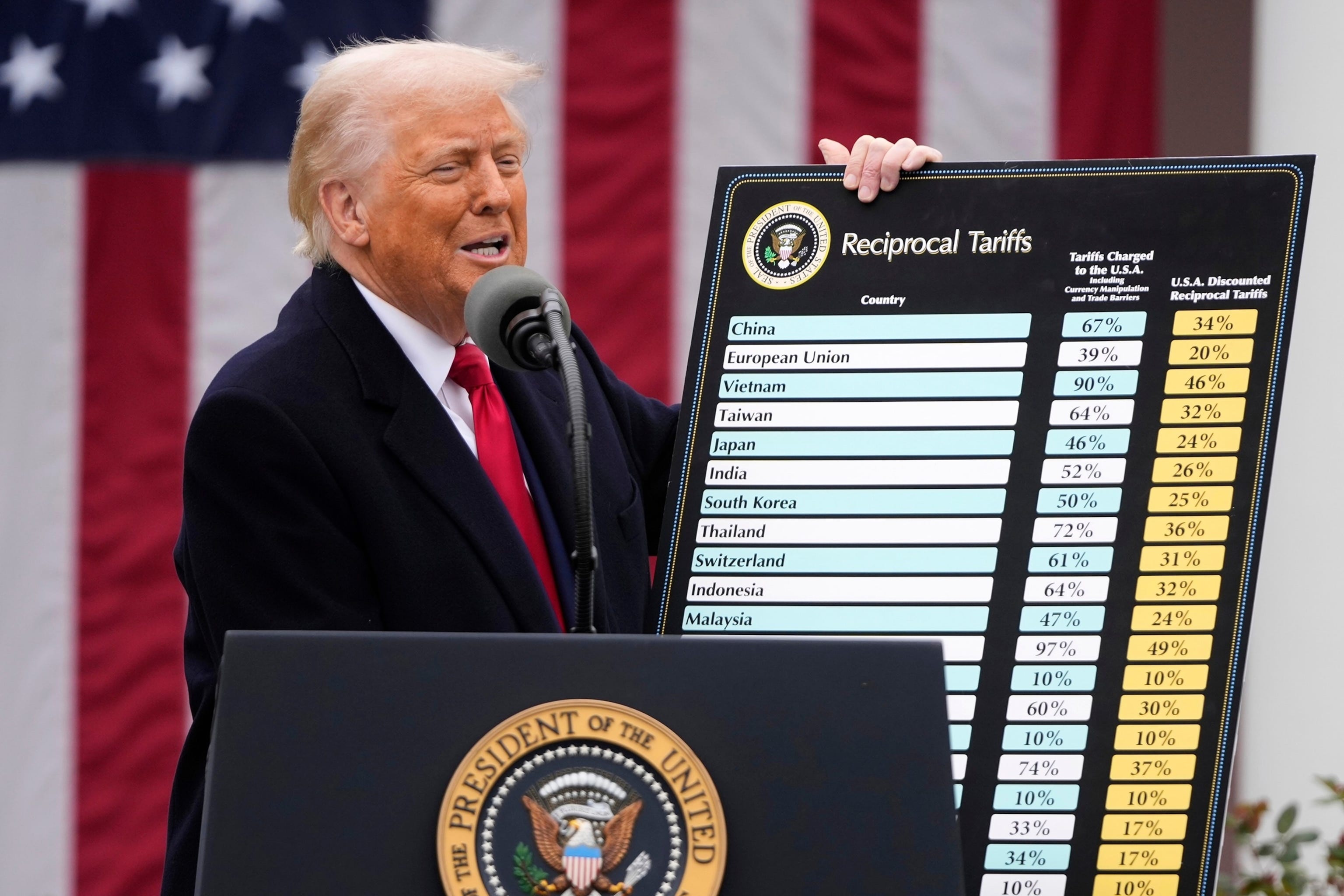
When he announced the increase in all of those tariffs, you’re confused, and then every economist on mainstream media is telling you that the tariffs would cause long term inflation, prices will go up, blah blah blah.
Now here you are UTTERLY confused about what the hell a tariff is! I don’t blame you, so I’m just going to lay it out:
Tariffs is simply a tax a government puts on goods that is coming into the country (aka imports).
It’s not a tax on products that your country produces, it is simply things that was made from elsewhere!
Okay now that you know, it is time we breakdown an example in the next section!
Tariff 101: The Process Behind The Tariff
Okay, we got 2 people here: Timmy Turner’s Father…. which he’s named… Mr. Turner… And we have his neighbor, Dinkleberg, these 2 get along well right?

Well that’s a bit awkward… okay, let’s move on!
So these 2 gentlemen are selling lemonades on the street to their neighbors
For Mr. Turner’s side, his lemonade costs only $1 to make, and he sells it for $2.
Dinkleberg’s lemonade quality was better and cheaper, as he made it for $0.50, sells it for $1.50.
So the people in the neighborhood flock to Dinkleberg’s lemonade stand instead of Dad’s. Well, that just pissed of Mr. Turner…. so much so he heads to the HOA President, and he complained that Dinkleberg is getting cheap stuff from somewhere.
”Mr. President!” Said Mr. Turner “Dinkleberg got his cheap lemonade from another neighborhood! You can’t allow this- THIS MALPRACTICE!* he exclaimed.
Then the president of the HOA told Mr. Turner “You are right! The lemonades should be grown in OUR neighborhood and not be sourced from anywhere else!*
And so HOA president declared that any lemonade truck coming to Dinkleberg’s side will have to pay an entry free of $1 per case.
So now the $0.50 that it cost Dinkleberg to make the lemonade jumped to $1.50, and to make a profit, Dinkleberg will have to sell his lemonade for $2.50 or more.
That means for Mr. Turner, his $2 becomes very attractive and people buy from him! Mr. Turner can finally rub in to Dinkleberg’s face he beat him…
Now who wins? Well there’s 2 winners?
First, The HOA! Now they collect revenue from the importers and before income taxes it was a major way for governments to raise money.
Second, the domestic producer! Thanks to the tariff, they get protection, meaning they can charge a higher price or keep more market share without having to compete hard on either price of quality.
”IN YOUR FACE DINKLEBERG! MY LEMONADE SELLS BETTER THAN YOURS!” Exclaimed Mr. Turner.
Wait hold on Mr. Turner before you celebrate, we need to share the losers and bad news!
Who loses in this situation? Well….
The Importer! When the shipment arrives in the country (in this example the neighborhood) they pay the tax upfront to the government.
And the biggest loser of them all:
THE CONSUMER! Because the importer now has to raise prices to cover the tax, and it cost more for everyone to buy it.
The bad news through the entire is situation is that a higher price would lead to consumers to have less money to spend on (More on this point in the next subsection) on top of that, the industries that get protection get lazy because there’s less competition, and finally, the other neighborhood (in this case another country) could retaliate with their own tariffs, which would hurt the exporter (People who sells this to other countries)
Congratulations you just passed the Tariff 101 course! Now let’s move on deeper as to why people really doesn’t know what they are talking about when it comes to tariffs!
The Actual Problem: Tariffs Are More Deflationary Than Inflationary
For those that may not known, the United States of America is a consumer-driven economy. What does this mean?
This means that consumers in the US likes to spend, spend and SPEND. The US imports a TON of goods, all around the world, do a 10x mark up for the cost of the goods and make an insane profit.
As they import goods, what they export in exchange is dollars which provides global liquidity for the world, and therefore, the dollar weakens (which means exports becomes expensive while imports get cheaper), while the stock market in the US rises, treasury yields grow because of inflation and prices of goods for the consumer goes up.
So the US’s trade deficit (The Difference between Exports and imports) has to widen as a result of this in order for companies to make money.
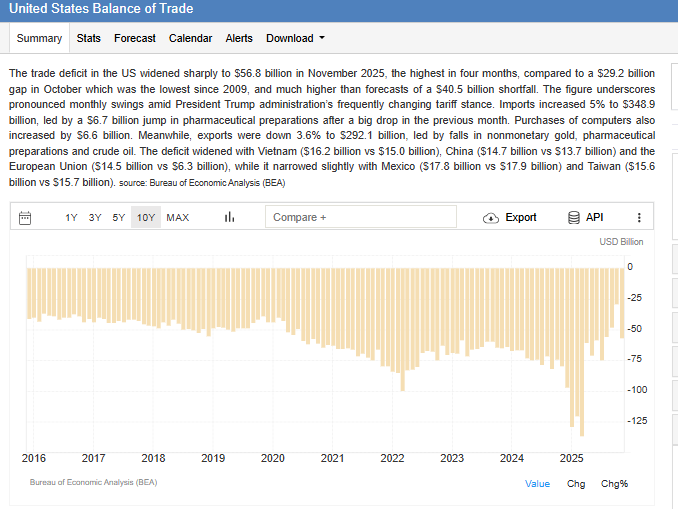
Now if tariffs increased as we saw in April 2nd, what would happen?
Well… imports gets more expensive…. (as we covered in the last section) as now companies who imports material from other countries will have to raise its prices to cover the tariff they pay to the US government.
This also means that the trade deficit will narrow meaning that people imports less goods from countries.
Now context matters a whole lot.
On The Market Vigil, through the articles made, you can clearly see the clear deflationary patters that are made, especially one on the consumer itself.
Consumers are facing soaring delinquencies, and that means banks will lend less money, which means consumers will by less.
And for companies that rose prices, they won’t see the demand because of that, even the domestic producers will suffer, not because of their laziness facing no competition, but there is less money available in the system for people to purchase goods.
Globally, that means dollars are exports less, and the law of supply and demand states that if you cut your supply, you will have an increase demand.
This lead to global liquidity drying up since there’s less dollars in the system, and now, what happens? Treasury yields goes down (People buying bonds), equities undergoes a very deep correction, gold and silver starts rising as a way to protect wealth and that means for you, the consumer, prices goes down which is good news, but the bad news is that it will come at the expense of your job! Ouch….
And here’s what many many economist get this wrong: Tariffs long term are not inflationary, when in reality, they are deflationary, and when the CPI, PPI and PCE numbers drop they will say “It was unexpected.”
So the next time you go to wherever you get your financial news from and there’s someone that says the tariffs are inflationary you shout at your tv screen:
THAT’S BULLSHIT!